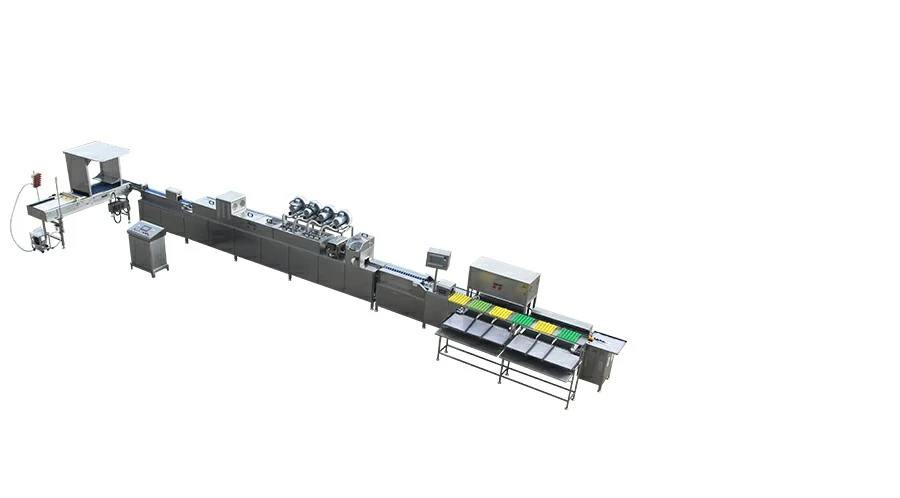
302A Egg Cleaning Production Line
Model: ZYL-JS1-D1-3ZP
Description
Product Overview
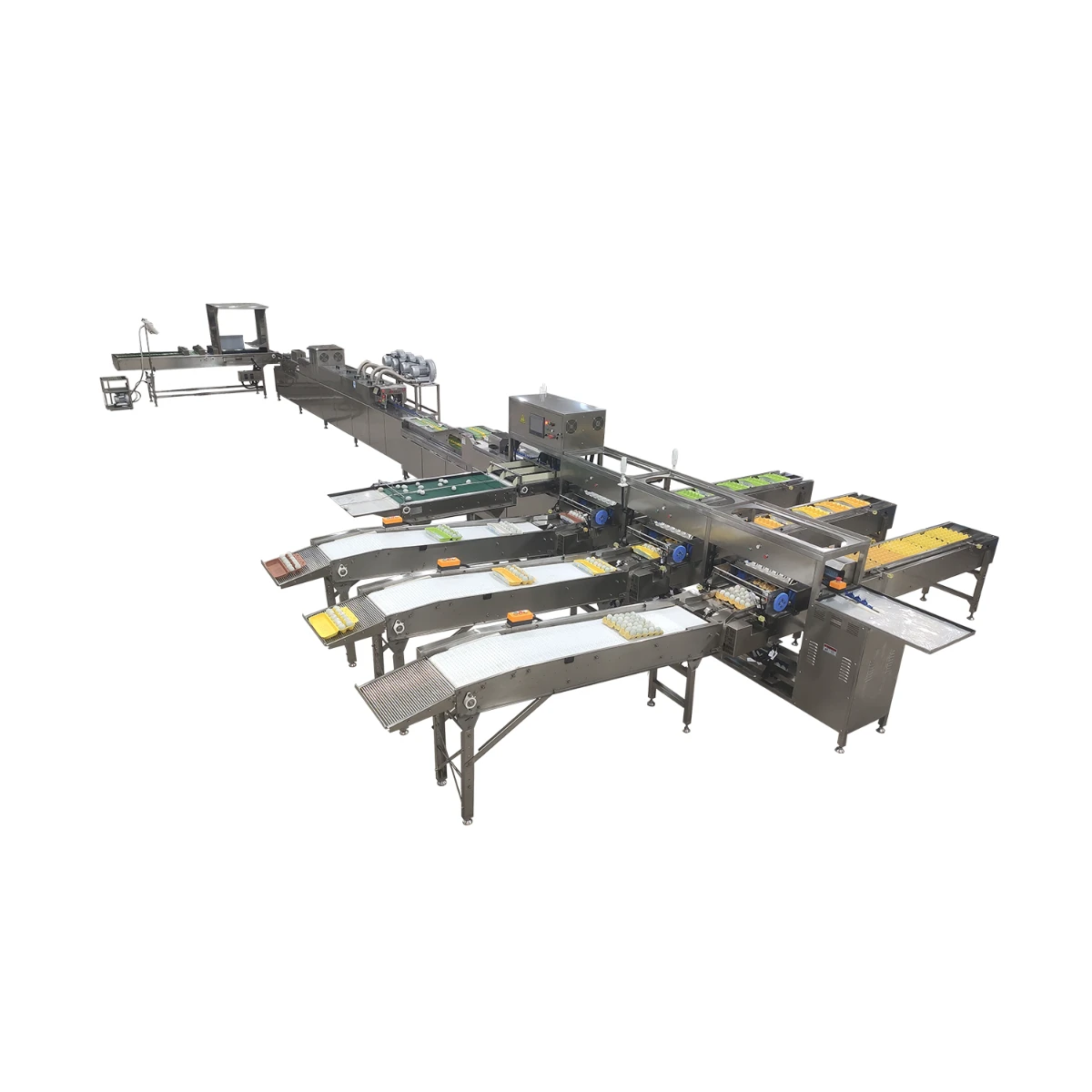
The 302A Clean Egg Production Line (Model: ZYL-JS1-D1-3ZP) is a small-scale equipment for cleaning and processing eggs, with an operating capacity of up to 10,000 eggs per hour. It is suitable for chicken coops equipped with a central egg collection system and small-scale egg processing enterprises. It combines practicality and flexibility, meeting the needs of small-scale, mass production.
The device's front end features an egg conveying mechanism that combines a modulated resistance band with rubber wheels. This design is scientifically sound and versatile, suitable for a variety of feeding scenarios. It can be directly connected to the central egg collection system to achieve an automated transition of eggs from collection to processing. Alternatively, it can use suction cups for egg loading, providing flexibility to adapt to different locations and production processes, and can be put into use without any additional modifications.
The device features a comprehensive range of functions, integrating core technologies such as disinfection spraying, cleaning, air drying, oil spraying, automatic turning, weight grading, and automatic packaging. It enables the entire process of egg handling – from cleaning and disinfection to grading and packaging – to be completed in one step. Additionally, depending on the specific application requirements, optional additional features such as online coding and AI vision inspection can be selected and configured flexibly to meet the personalized production standards of different enterprises.
The tray loading function has strong compatibility and can meet the automatic loading requirements for various types of blister boxes and pulp boxes, such as 2*5, 2*6, 3*5, 3*6, as well as the standard 5*6 egg trays. Each tray loading line can be specifically designed to accommodate eggs of a particular size, ensuring that the eggs are of uniform specifications and are properly loaded. In addition, the equipment can be equipped with an AI vision system that can identify and remove non-conforming eggs at the early stages of processing, further ensuring the quality of the finished eggs and increasing the production yield of qualified products.
Product Features
1.Processing capacity: 10,000 units per hour, with 5 levels of classification.
2. The device integrates cleaning, optical inspection, grading, and palletizing functions, offering a comprehensive range of capabilities.
3. Grading accuracy is within ±1g, ensuring the precision of the grading process.
4. Blister boxes and pulp boxes are available in various specifications, including 2*5, 2*6, 3*5, and 3*6, with strong compatibility for loading and supporting functions.
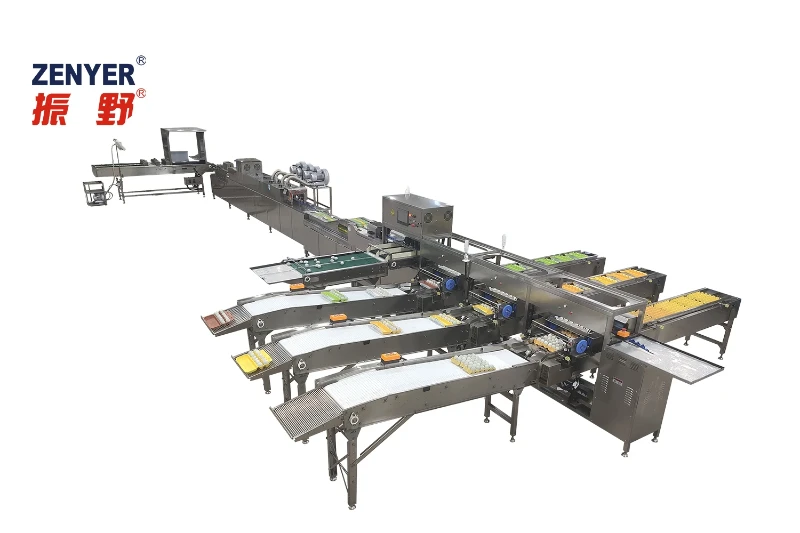
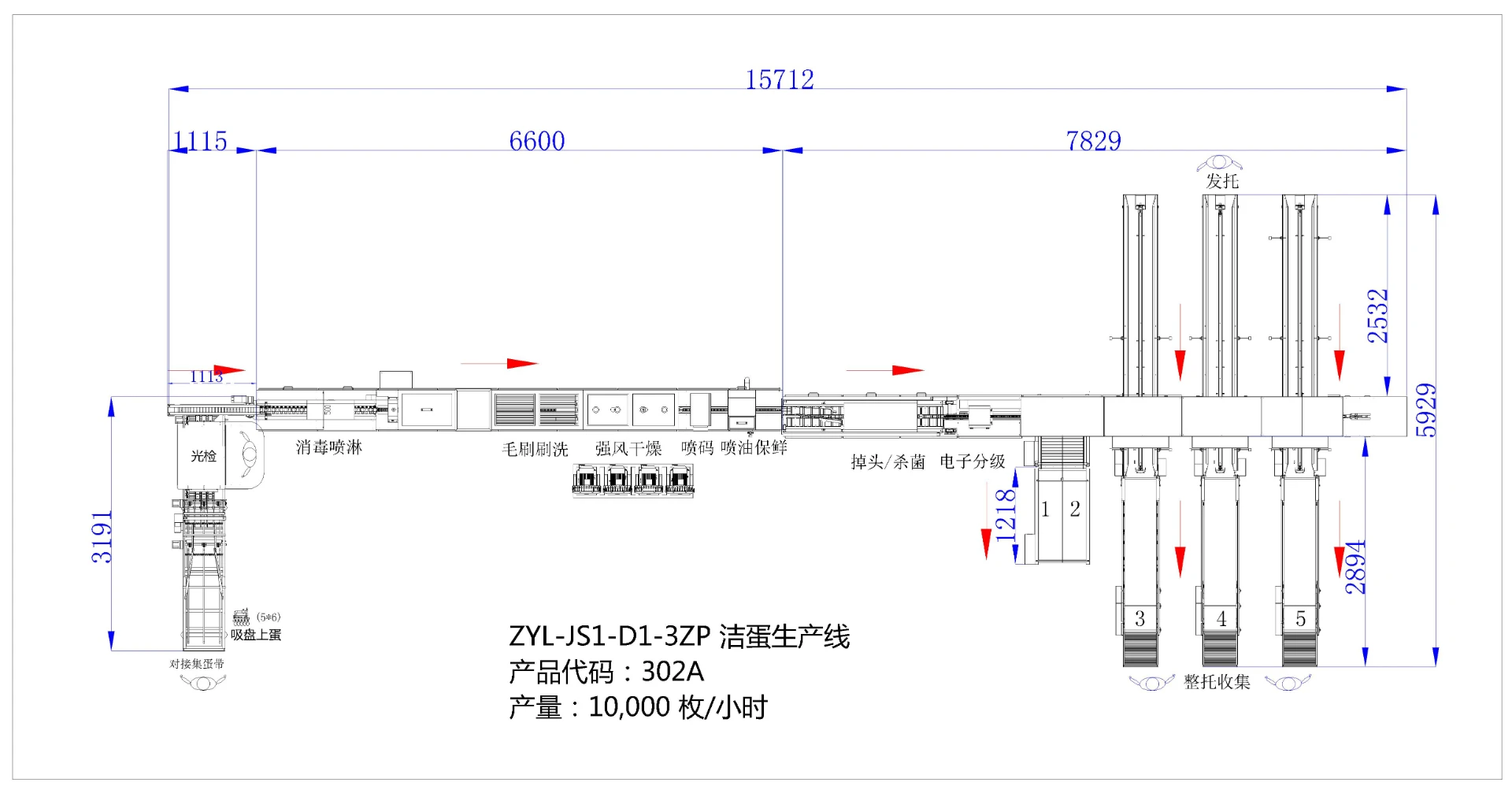
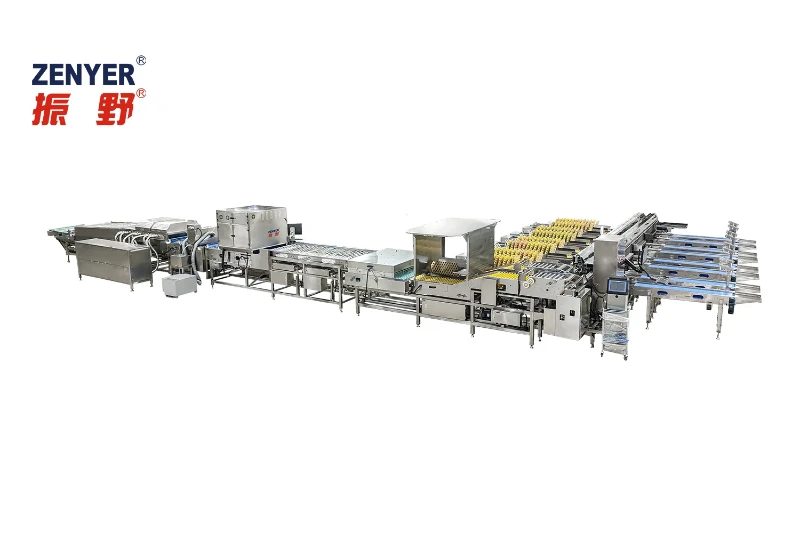
Device Schematic Diagram
Process Flow
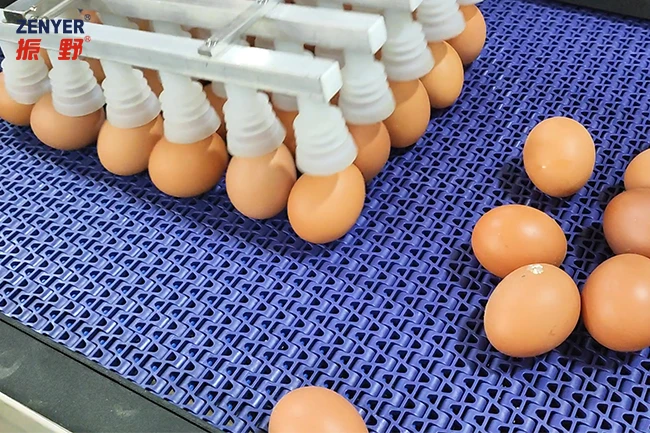
602 Egg Sucker: A manual operator uses 5*6 suction cups to pick up eggs from the egg tray, 30 eggs at a time, and then places them on the egg conveyor belt.
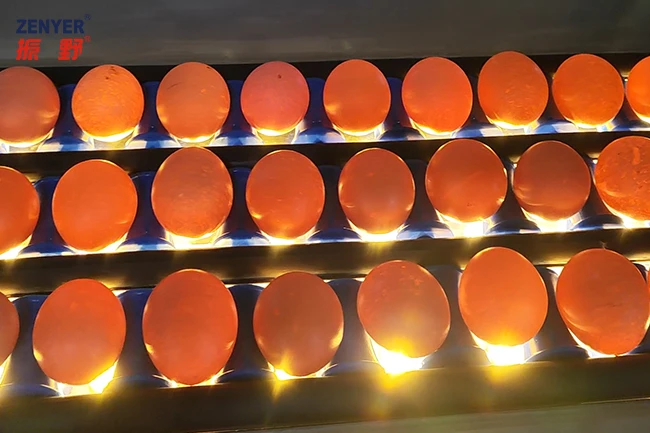
Light Inspection: The LED light inspection device is installed below the single-row rollers. As the eggs pass through the rollers, human eyes use light transmission detection to identify and remove defective eggs, as well as eggs with irregular shapes or other non-conforming qualities.
Disinfection Spraying: For the purpose of food safety, the disinfection spraying system automatically applies food-grade cleaning agents or disinfectants (provided by the customer) onto the surface of the eggs.
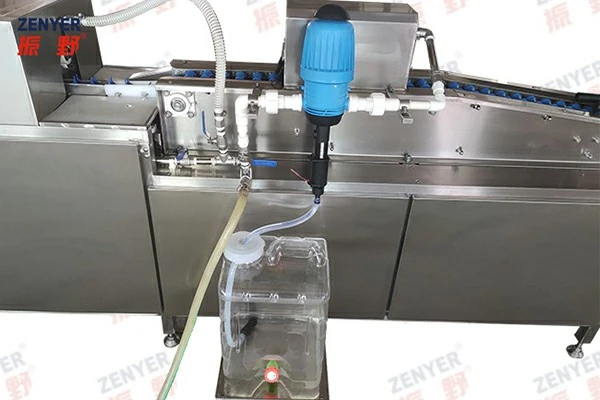
Cleaning: The eggs are placed into an egg cleaning machine, where they are sprayed with warm water and brushed before entering the air-drying system. The water heater is provided by the customer. For food safety reasons, the water used for cleaning the eggs cannot be reused, and the amount of water used can be adjusted according to the degree of dirt on the eggs.
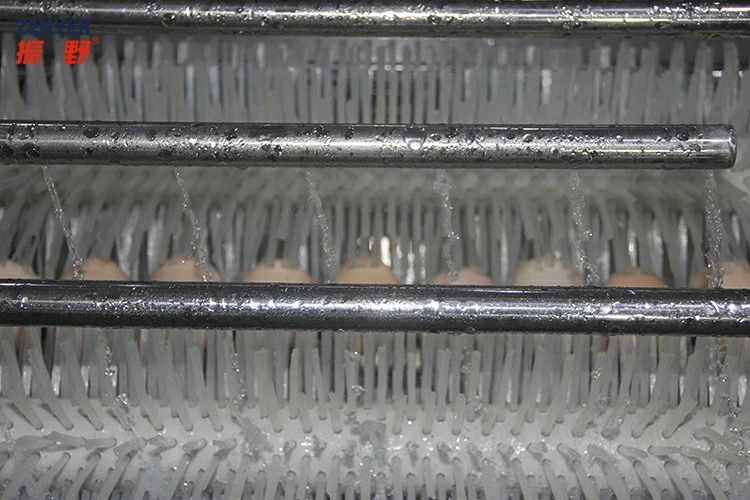
Air Drying: The air-drying brush in the posterior section of the egg cleaning machine removes most of the water from the eggs. The remaining water droplets are dried by the strong airflow generated by the fan, with a drying efficiency of up to 95% (depending on the local environmental humidity).
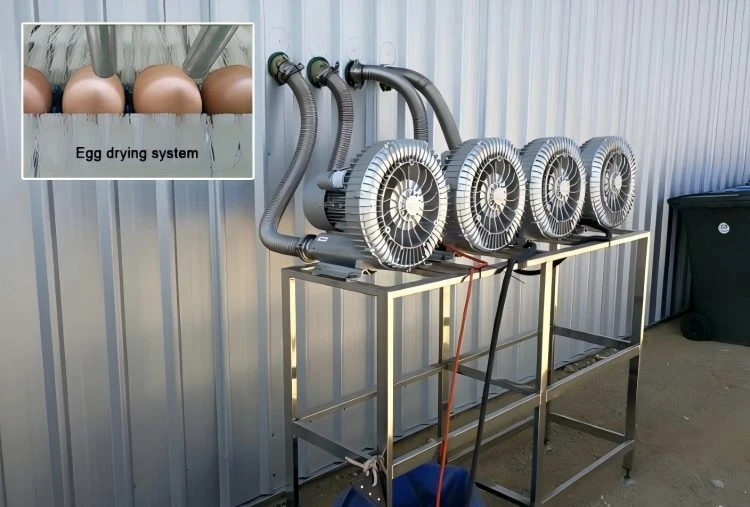
Spraying: Apply food-grade white mineral oil onto the surface of the dry and clean eggs. A uniquely designed spraying device atomizes the white mineral oil into particles smaller than 0.05mm, which then adhere to the eggshell. These particles are quickly absorbed by the eggshell’s capillary pores, forming a protective layer that helps reduce the loss of moisture inside the egg and prevents the entry of external bacteria. (The air compressor used for spraying is provided by the customer.)
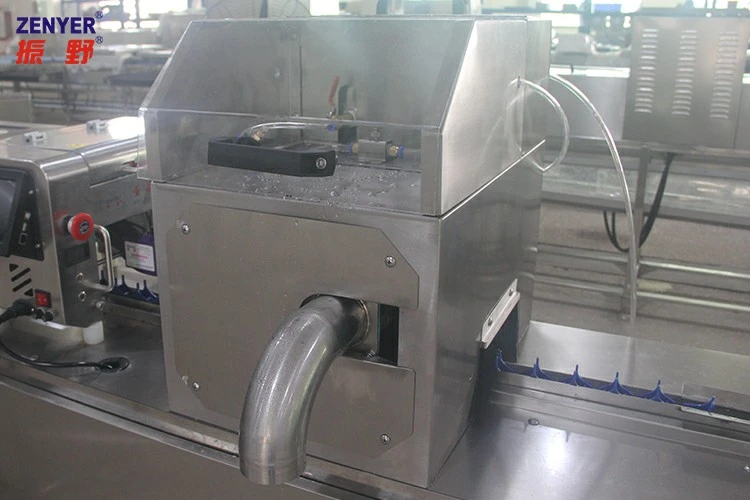
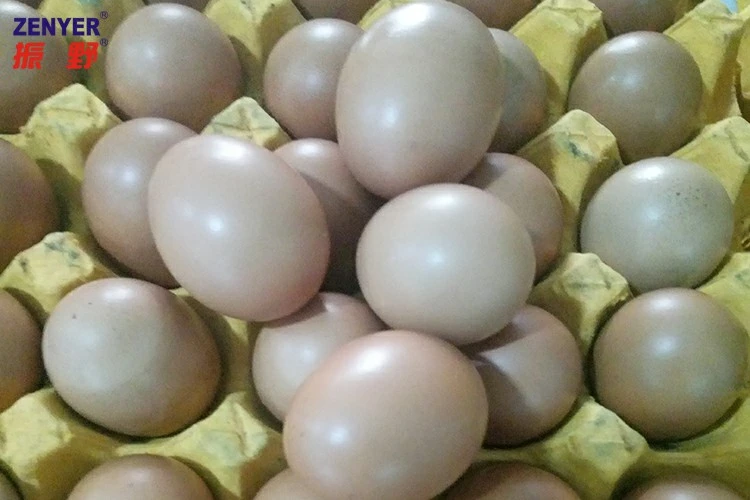
The fuel injection effect (for reference only; in reality, there's no need to apply such a thick layer of fuel).
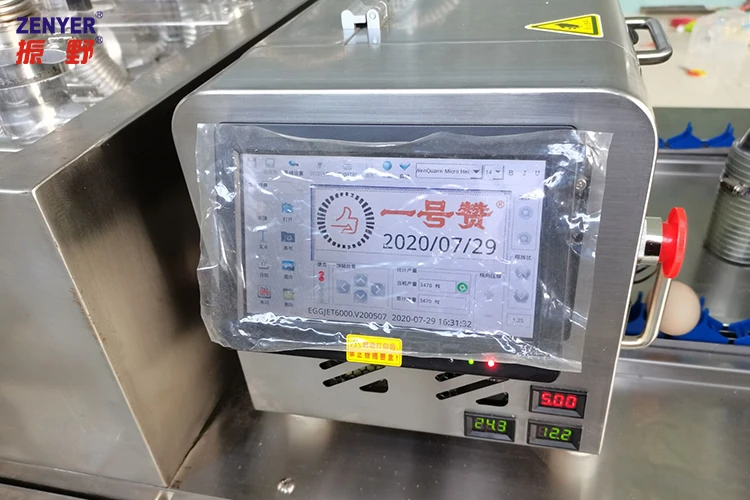
401H Egg Coding Machine: A touch-screen color sensor-based coding machine that triggers the coding process when an egg passes through the sensor below the machine. It is capable of printing text, dates, images, logos, and serial numbers on eggs. The uniquely designed ink cartridge suspension system ensures that eggs of various sizes can be successfully coded.
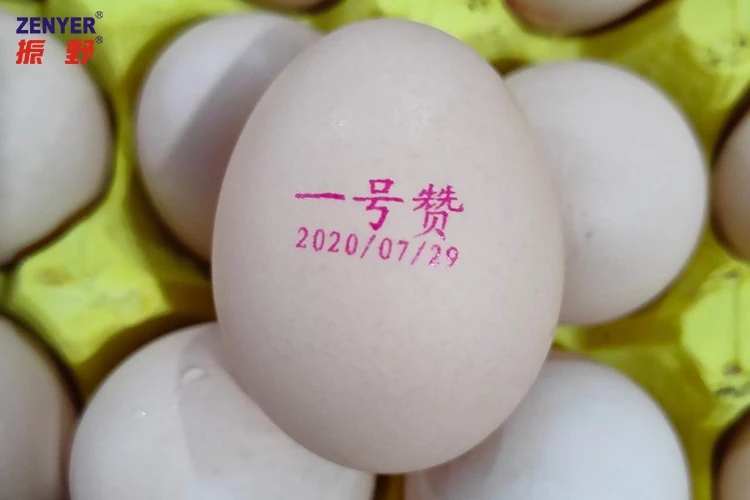
Inkjet printing effect
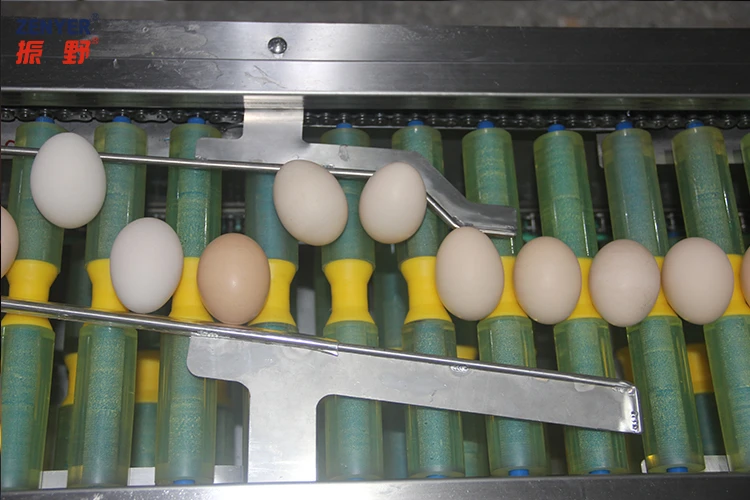
Turning around: A specially designed turning mechanism ensures that the eggs are oriented perfectly. The larger head (air chamber) faces upwards after the eggs are automatically packaged, allowing them to be stored for a longer period of time.
Sterilization: The eggs are sterilized by passing through an area equipped with ultraviolet sterilization lamps, reducing the number of bacteria on the eggshell surface to a minimum.
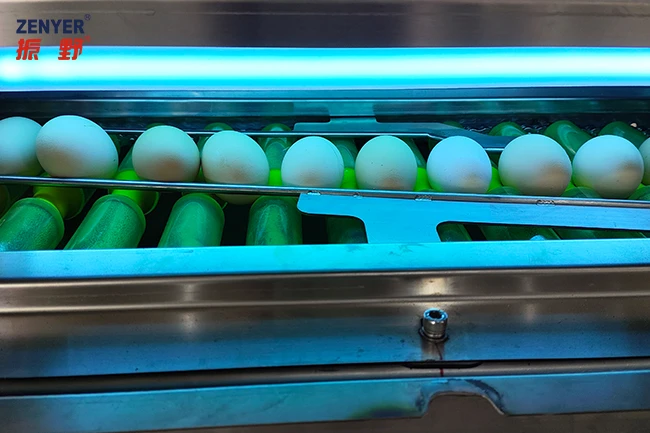
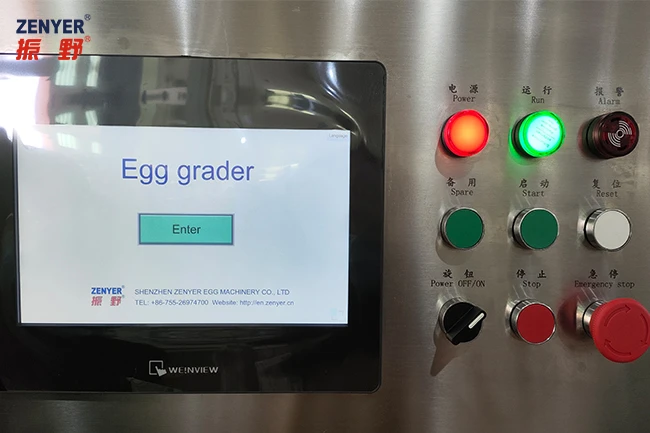
Grading and Counting: A color touchscreen PLC electronic grader with self-fault diagnosis capabilities. It can intelligently count the number of eggs at each grade for each shift, as well as the total number of eggs in each grade. The grading accuracy is ±1 gram.
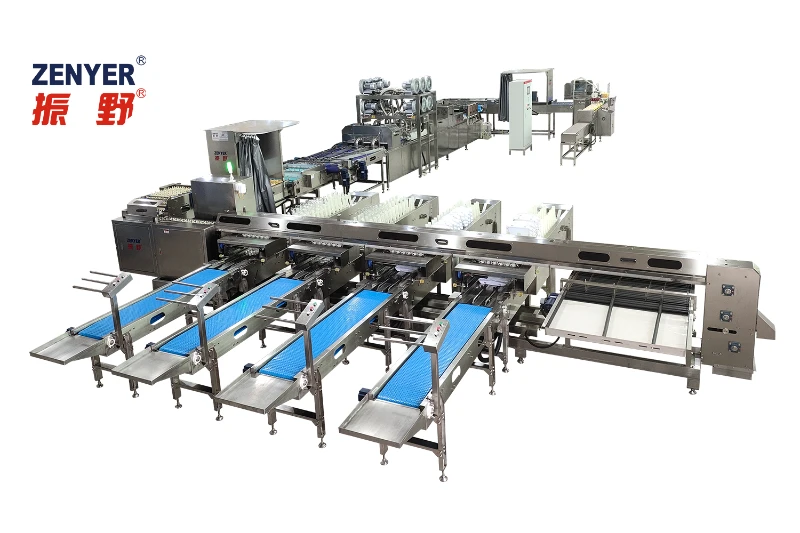
700A Egg Packaging Machine: This machine includes a single-row egg dropping device, a tray conveying device, and an egg outlet conveyor belt. The empty egg trays must be manually placed in the tray conveying device so that it can deliver them to the area where the eggs are dropped. The single-row egg dropping device automatically sorts the eggs into egg trays of capacities 10, 12, 15, 18, and 30 eggs each. The packaging machine packs eggs in batches, with each batch corresponding to a specific tray capacity.
Empty tray loading
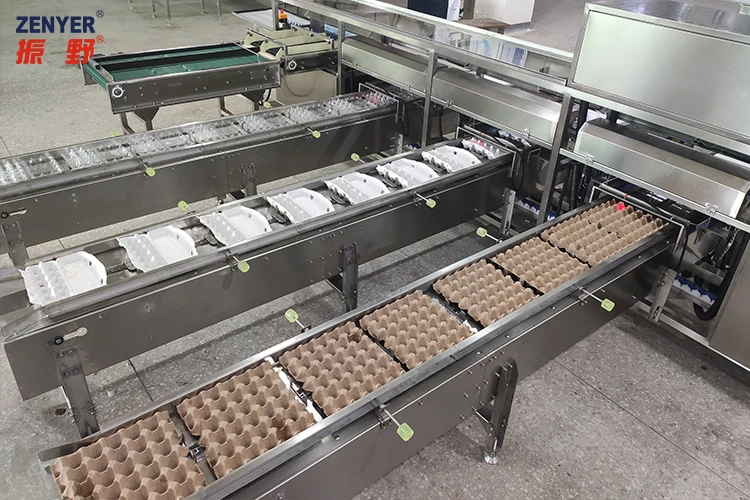
Automatic Packaging
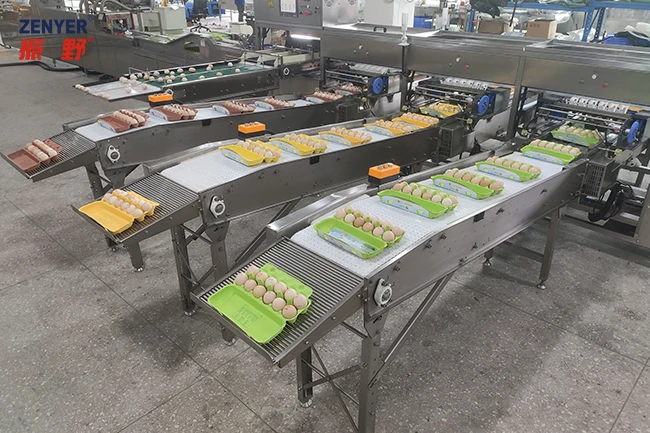
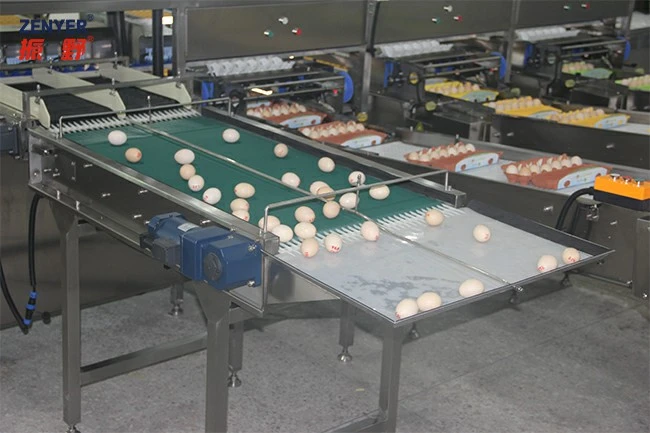
The 608A egg conveyor: With a length of 2.4 meters, except for the automatic packaging level, eggs from all other main grades fall onto the rolling foam rollers and then onto the conveyor belt. The eggs are manually collected and placed into containers. A single egg conveyor can be used for the packaging of eggs from up to two different grades. Eggs that are too large or too small are directed to the "off-grade" section at the back of the equipment.
Features
- 1) Feeding Adaptability: The egg conveying structure features a module belt and rubber wheels, enabling dual-mode feeding.
- 2) Integrates cleaning, optical inspection, grading, and palletizing into one process, completing egg processing in one stop.
- 3) Grading accuracy is within ±1g, ensuring the precision of the grading process.
- 4) Optional upgrades are available: AI vision detection and online coding modules can be installed to customize the configuration according to the needs of different companies' quality control standards.
- 5) The tray can be adapted to multiple types of packaging: compatible with 2*5, 2*6, 3*5, 3*6 blister boxes/pulp boxes, and 5*6 standard paper trays.
Specifications
Features
- 1) Feeding Adaptability: The egg conveying structure features a module belt and rubber wheels, enabling dual-mode feeding.
- 2) Integrates cleaning, optical inspection, grading, and palletizing into one process, completing egg processing in one stop.
- 3) Grading accuracy is within ±1g, ensuring the precision of the grading process.
- 4) Optional upgrades are available: AI vision detection and online coding modules can be installed to customize the configuration according to the needs of different companies' quality control standards.
- 5) The tray can be adapted to multiple types of packaging: compatible with 2*5, 2*6, 3*5, 3*6 blister boxes/pulp boxes, and 5*6 standard paper trays.