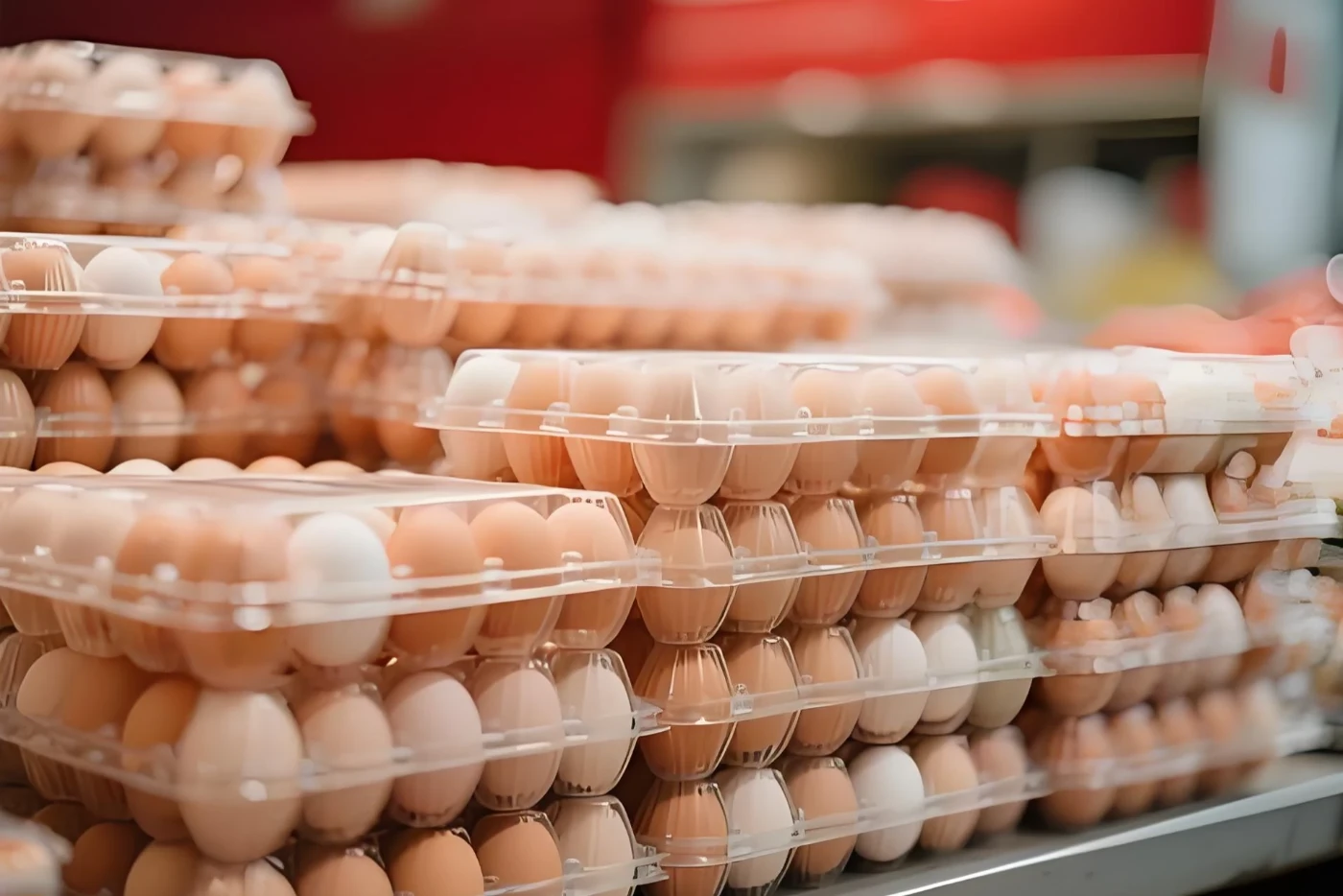
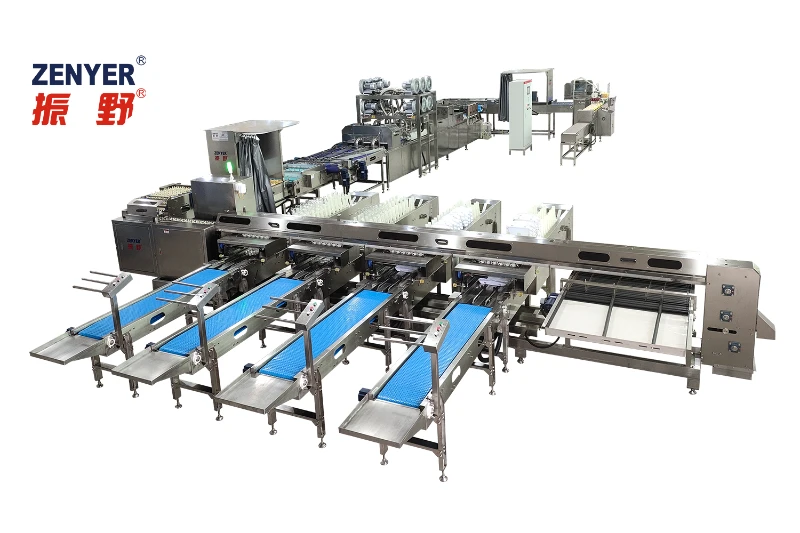
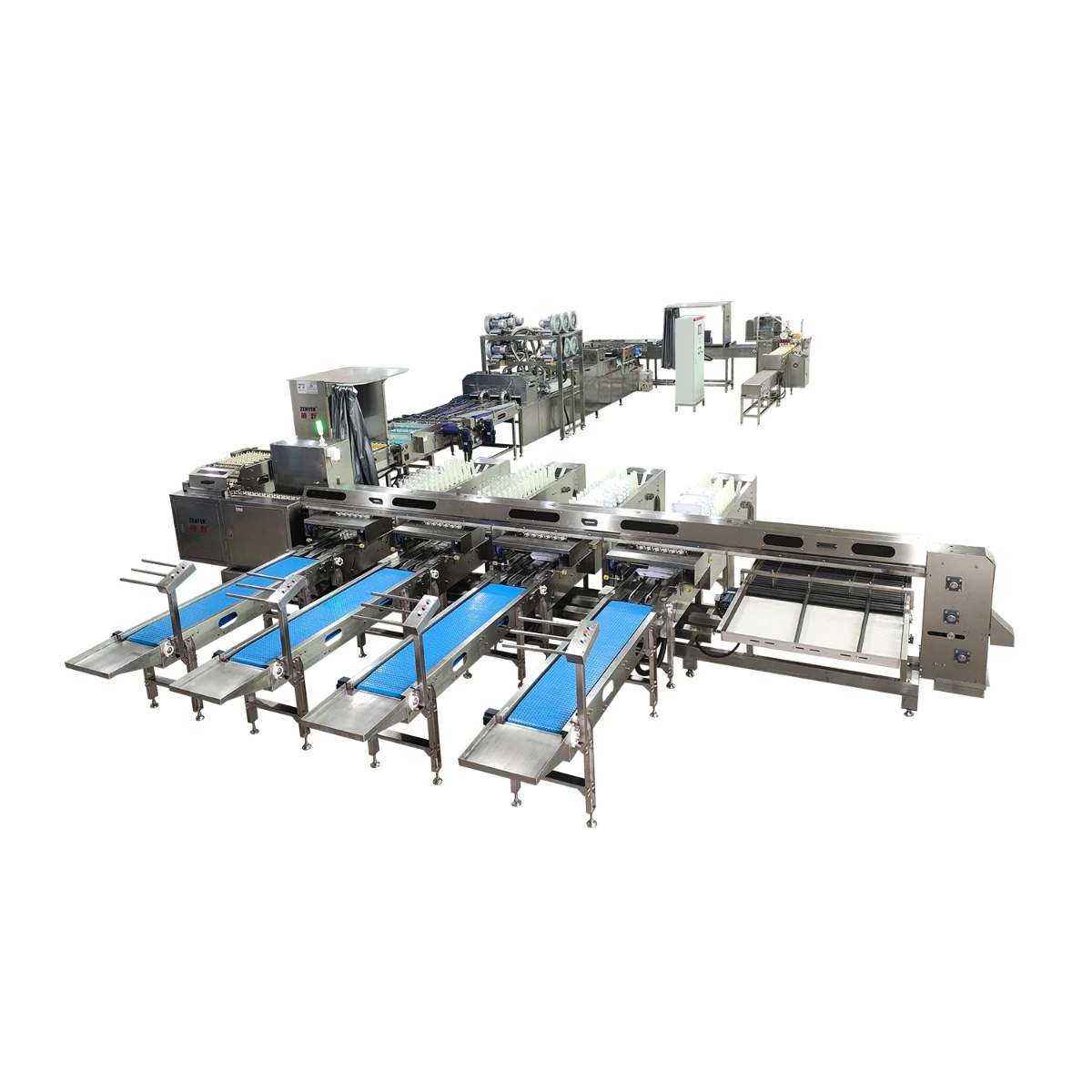
304A Egg Washing Grading Line
Model: ZYL-JS3-HDS6-4Z
Description
Product Overview
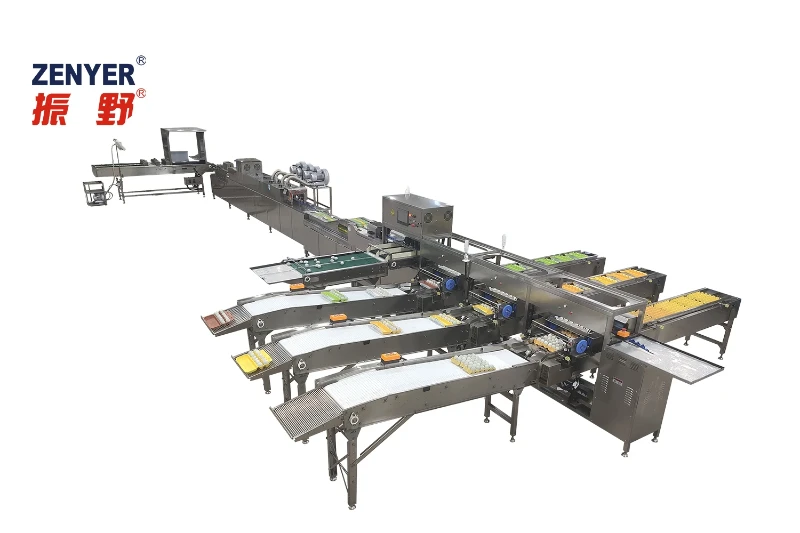
The 304A Clean Egg Production Line (Model: ZYL-JS3-HDS6-4Z) is a multifunctional device for processing and cleaning eggs. The line has an output capacity of 30,000 eggs per hour and includes features such as disinfection spraying, cleaning, air drying, oil spraying, automatic egg turning, weight grading, and automatic packaging. It can be directly connected to a central egg collection conveyor belt. Optional additional features include a robotic egg loading mechanism, online coding, and AI vision inspection systems. Different configurations can be selected according to specific application requirements. The equipment is capable of loading eggs onto egg trays with a layout of 5*6 eggs, as well as automatically loading eggs into blister boxes, pulp boxes, and other types of egg containers with dimensions of 2*5, 2*6, 3*5, or 3*6 eggs per tray. It is suitable for egg farms with a capacity of 100,000 to 200,000 hens or for medium-sized egg processing enterprises.
Use Case 1: Laying hen farms, which are directly connected to the central egg collection system. You can choose to connect from the side or the back depending on the placement of the equipment. When connecting to the central egg collection system, the egg collection conveyor belt must be controlled in coordination with our equipment. Since the eggs produced directly from the farms have not been screened, to ensure uniform quality, we recommend using AI vision inspection equipment that performs significantly better than manual inspections. After cleaning, the defective eggs should be removed before further grading and packaging.
Use Case 2: Egg Processing Enterprises. For egg processing enterprises, we have equipped the egg loading process with automated robotic arms that are easy to operate, efficient, and labor-saving, which can significantly reduce the amount of manual labor required. Additionally, an AI vision system can be configured to pre-screen and eliminate unqualified eggs.
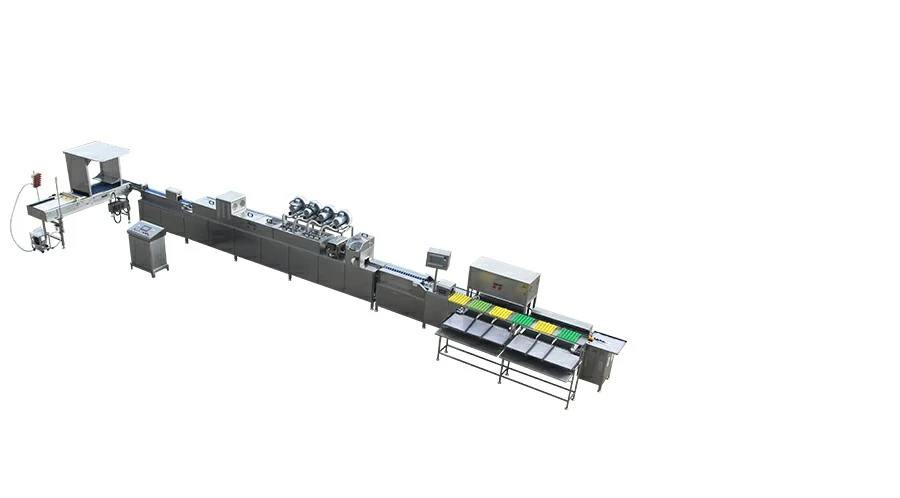
Device Schematic Diagram
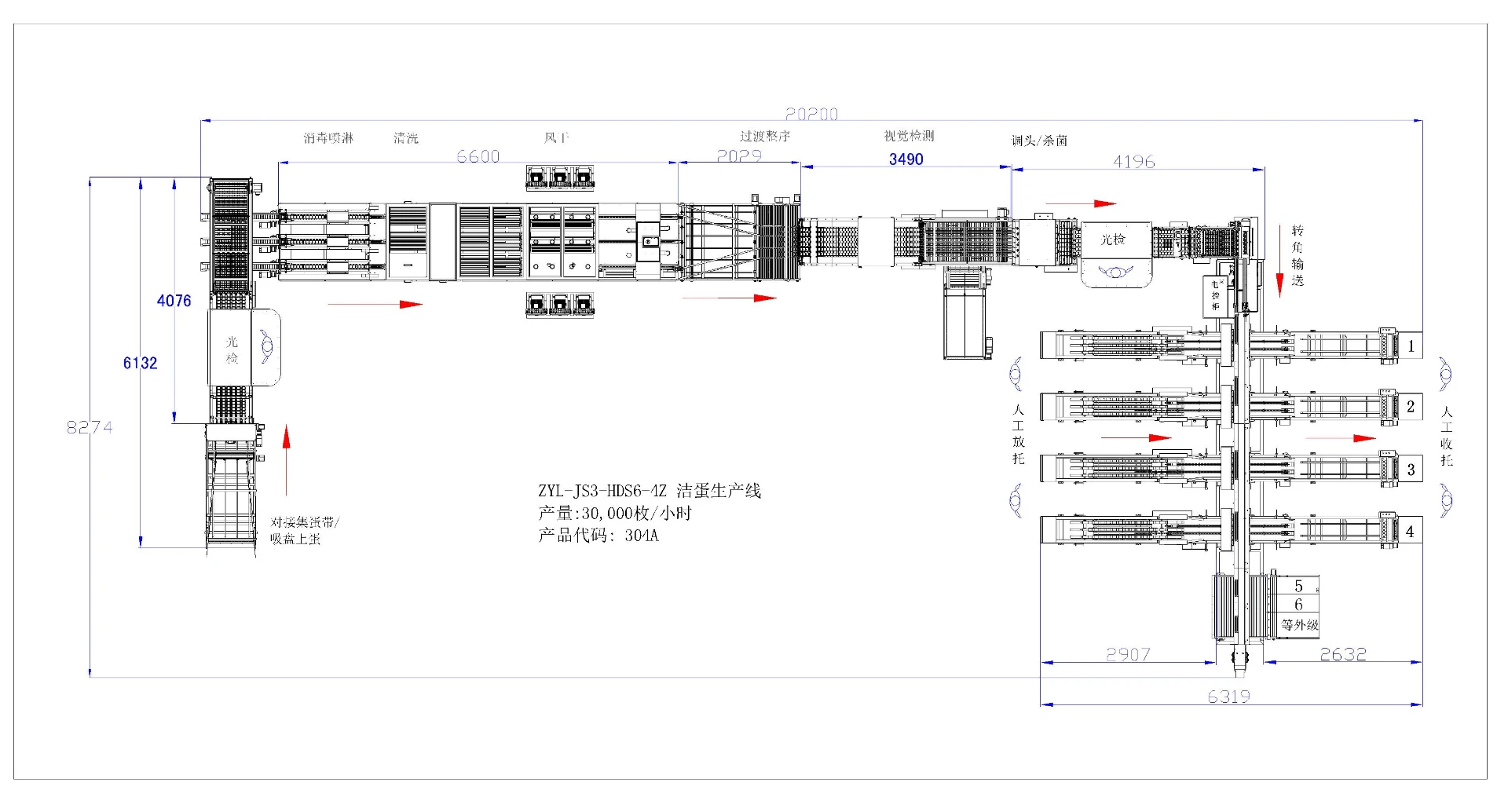
Process Flow:
Egg collection and transportation: Utilizes a three-stage conveyor system that can be connected to the egg collection belt, featuring lane division and optical inspection capabilities.
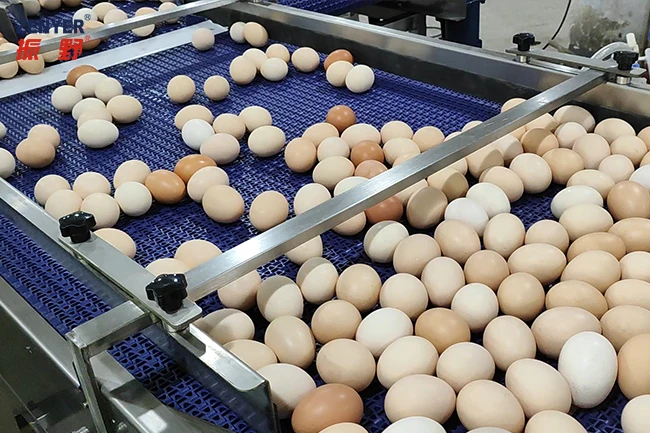
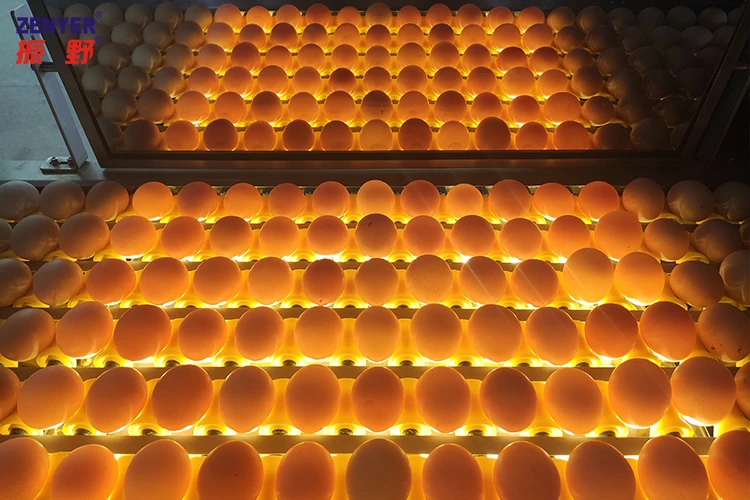
Light Inspection: Cold light source lamp beads are used for illumination from above. One worker is required for the light inspection; a light inspection cover and a light shield are provided to prevent light leakage. The light inspection drawer box comes with a PVC dust cover for easy cleaning. A stainless-steel light inspection mirror is included, allowing inspectors to directly view the items through the mirror to identify any defects, thus avoiding damage to their eyes from direct exposure to the light.
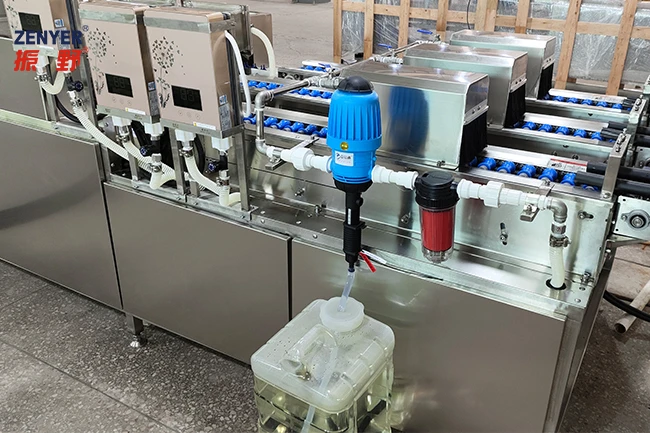
Disinfection Spraying: Equipped with an automatic proportioning pump and dosing device, the disinfectant is sprayed onto the surface of the eggs through a high-pressure spraying system, achieving the desired disinfection effect; the flow rate of the disinfectant can be adjusted and controlled.
Cleaning: Use a spraying method, combined with a soft brush and warm water, to wash off dust, feathers, feces, and other debris from the surface of the eggs.
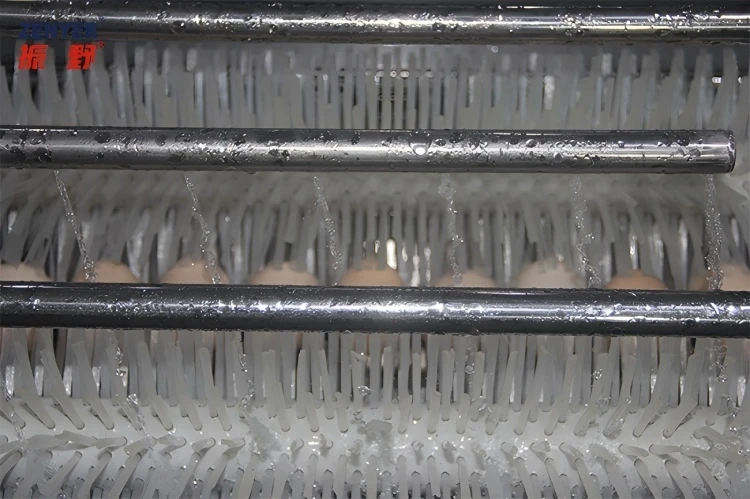
Air Drying: This process uses hot air to remove the moisture from the surface of the eggs, ensuring that the eggs remain dry.
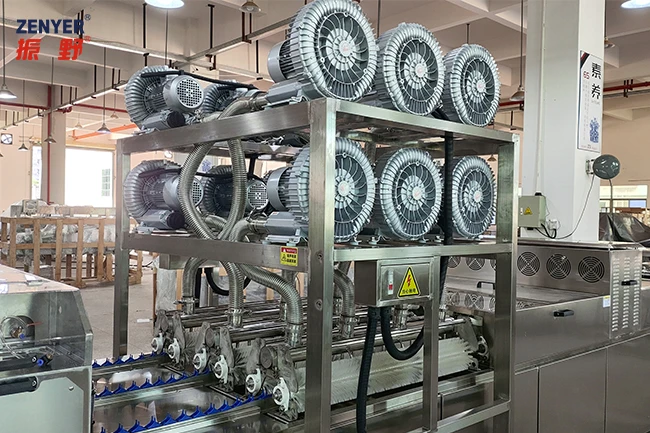
Fuel injection: A uniquely designed fuel injection system atomizes the white mineral oil into particles smaller than 0.05mm, which are then applied to the surface of the eggshell. These particles are quickly absorbed by the eggshell’s capillary pores, forming a protective layer that helps to reduce the loss of moisture inside the egg and prevents the entry of external bacteria.
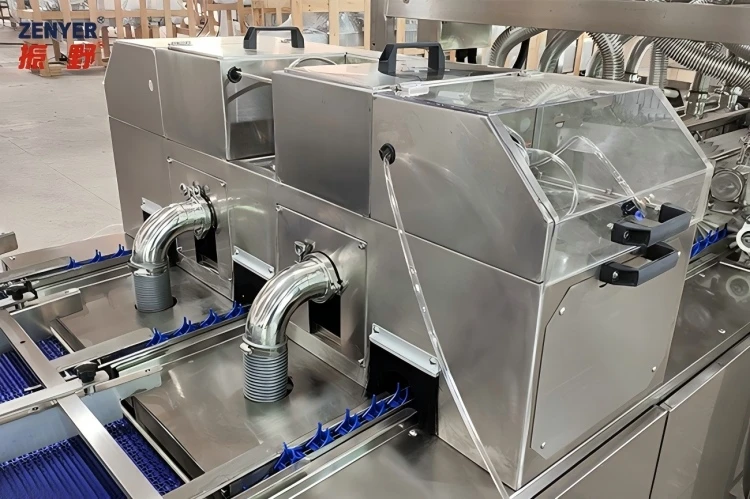
The fuel injection effect is for reference only; in practice, it’s generally not necessary to apply such a thick layer of fuel.
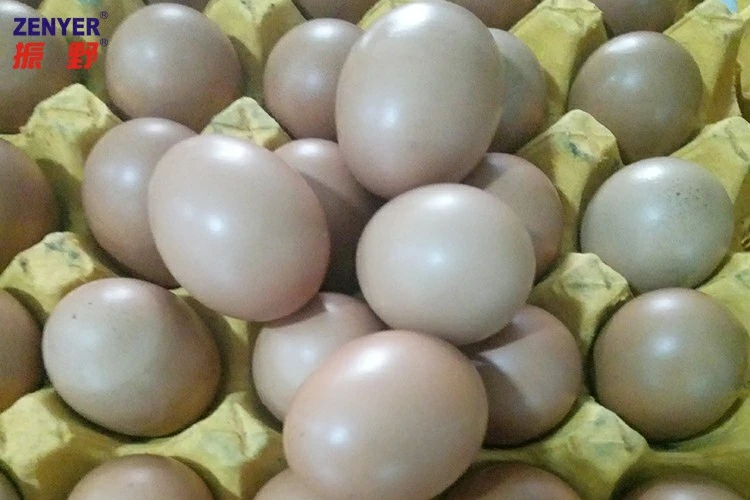
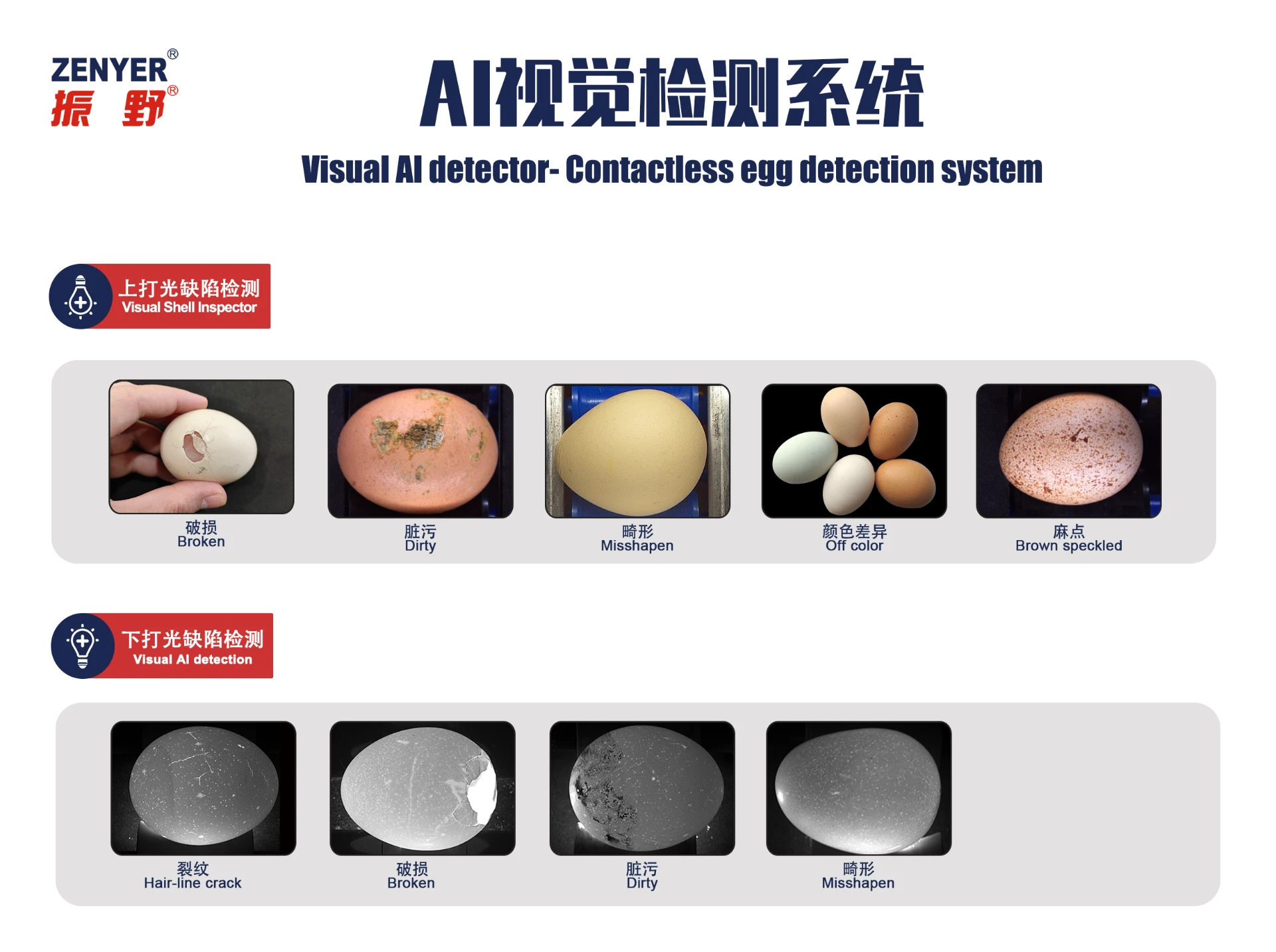
AI Vision Inspection: An intelligent AI vision inspection system that can automatically identify and eliminate defective eggs, such as those that are damaged, dirty, misshapen, have sand on their shells, pockmarks, or color discrepancies. The detection accuracy is ≥95%.
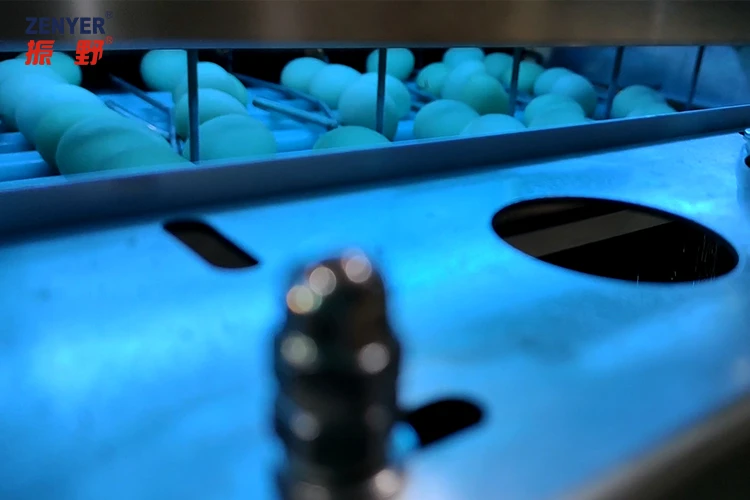
U-turn and UV sterilization: Thanks to a unique design that allows the eggs to be turned, the larger and smaller ends of the eggs are aligned in the same direction, ensuring that they are placed with the larger end facing up when loaded onto the tray. The larger end (the air chamber) is always positioned upward after the eggs are automatically loaded onto the tray, allowing for longer storage.
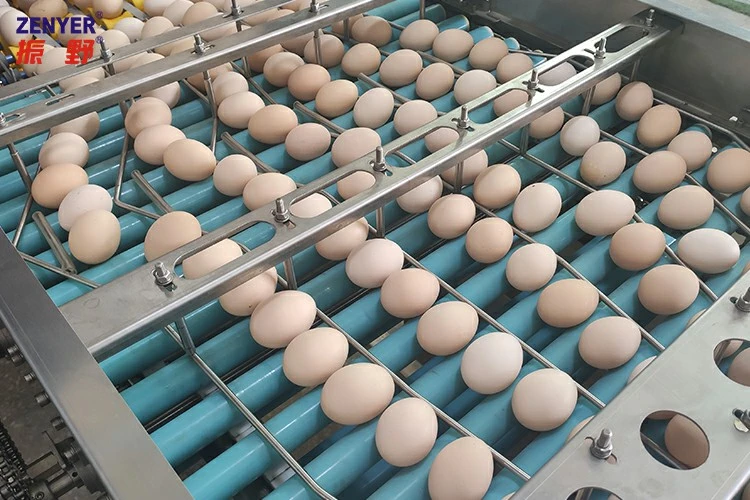
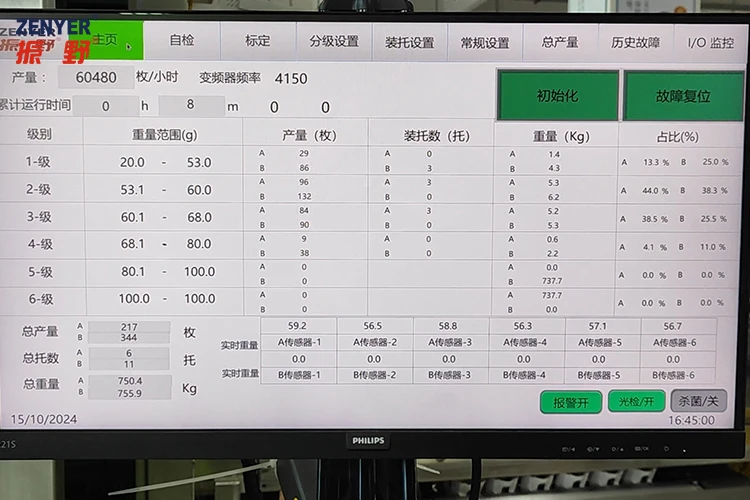
Grading and Counting: A color touchscreen PLC electronic grader with self-fault diagnosis capabilities. It can intelligently count the number of eggs at each grade for each shift, as well as the total number of eggs in each grade.
The tray feeder: It manually places the trays and automatically transports them to the loading position. It can accommodate multiple egg trays, reducing the frequency of empty tray replacements.
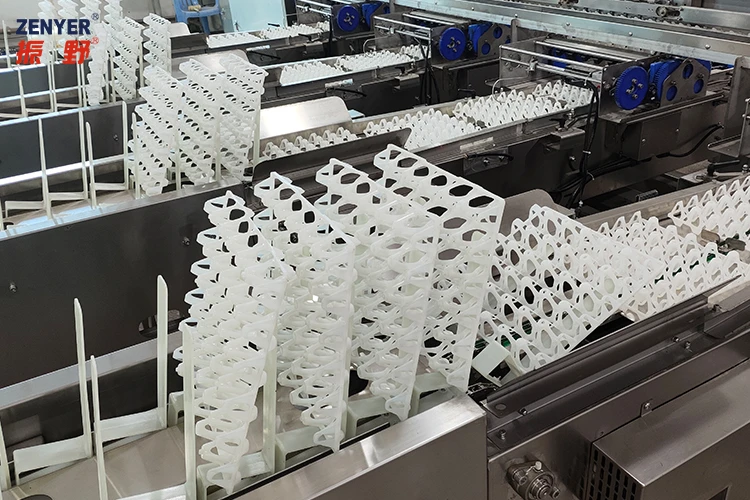
Egg loading machine: Automatically loads eggs of different sizes into corresponding egg trays, capable of handling 2*5, 2*6, 3*5, 3*6 egg boxes with lids, as well as 4*5 and 4*6 egg trays without lids.
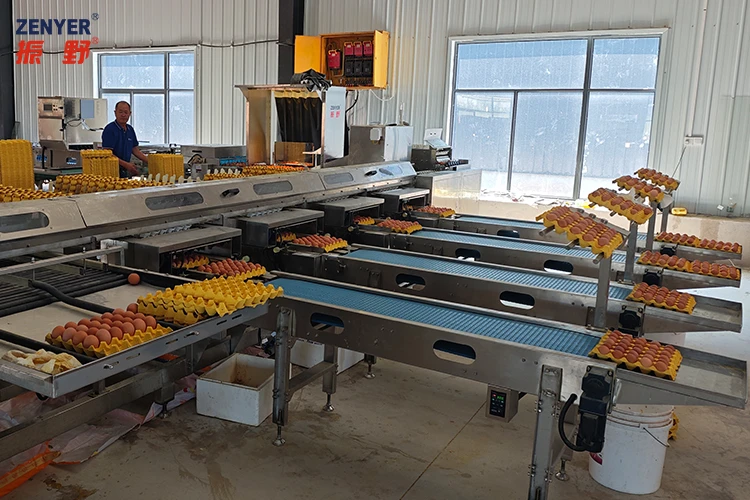
Extra-grade egg collection tables (1 set): Used for manually collecting eggs that do not fall within the grading criteria; available in 2 weight categories plus 1 extra-grade category.
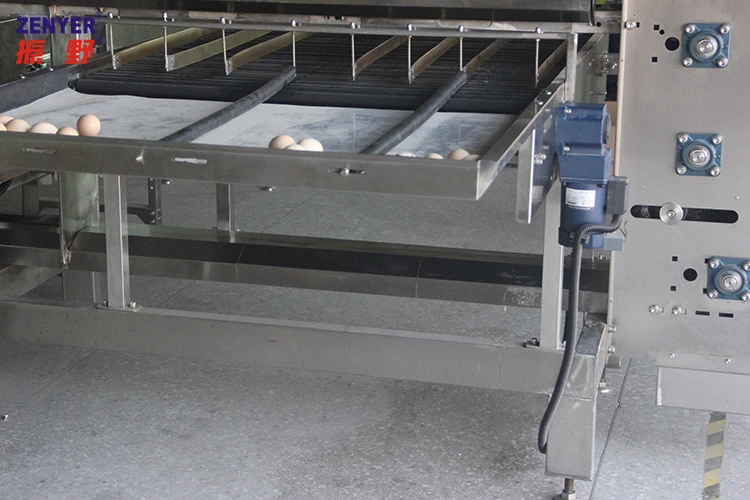
Features
- 1) Processing capacity of 20,000 items per hour, with up to 6 levels of classification.
- 2) Grading accuracy within ±1g, highly efficient and precise.
- 3) Integrates cleaning, optical inspection, grading, and palletizing into one process.
- 4) Made of 304 stainless steel, suitable for large enterprises.
Specifications
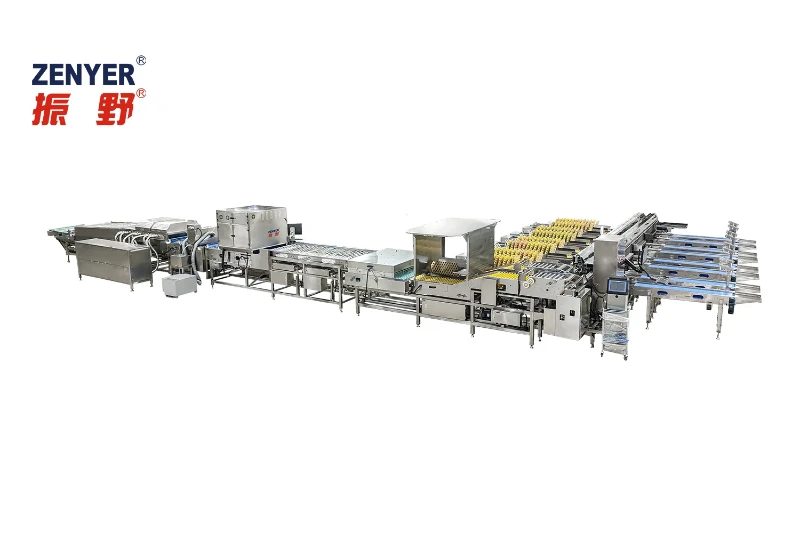
Features
- 1) Processing capacity of 20,000 items per hour, with up to 6 levels of classification.
- 2) Grading accuracy within ±1g, highly efficient and precise.
- 3) Integrates cleaning, optical inspection, grading, and palletizing into one process.
- 4) Made of 304 stainless steel, suitable for large enterprises.