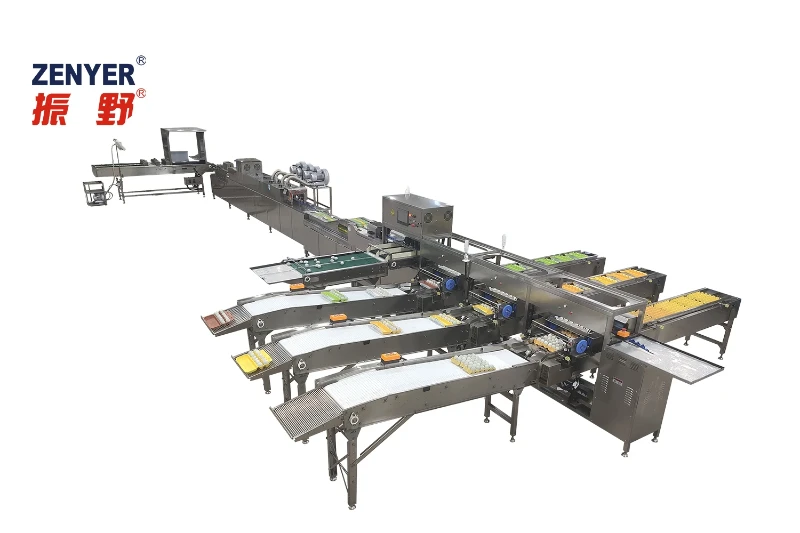
ZYL-JS1-D1-C Egg Washing Grading Line
Model: ZYL-JS1-D1-C
Description
Product Overview
Product Features
1.The processing capacity is 10,000 units per hour, and it can be divided into 3 to 6 levels.
2. Grading accuracy within ±1g, with flexible configuration of grading schemes.
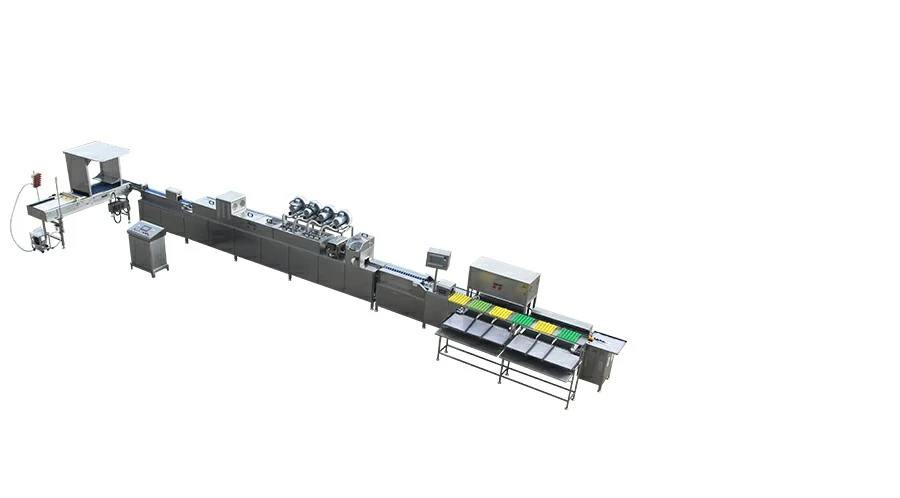
3. Integrates cleaning, optical inspection, and grading into one system.
4.304 stainless steel, it operates stably and reliably.
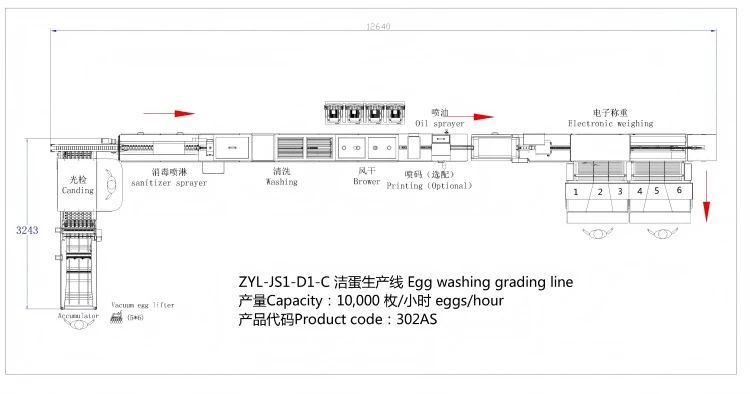
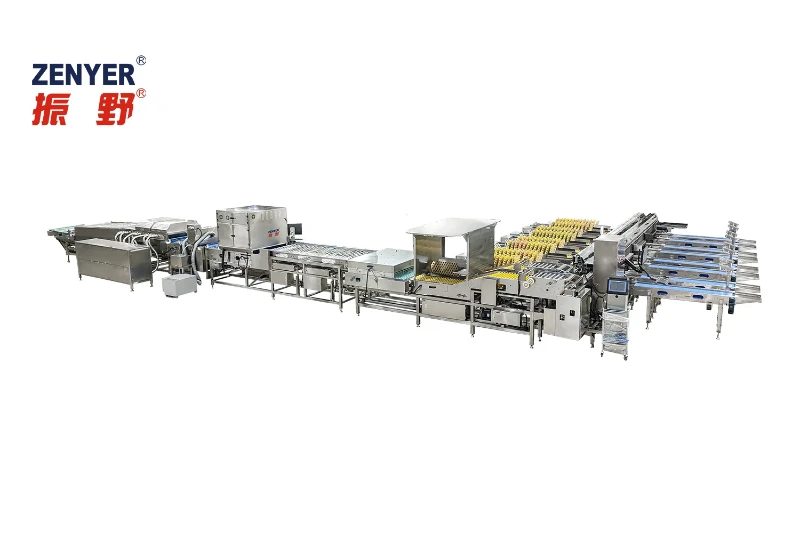
Device Schematic Diagram
Process Flow
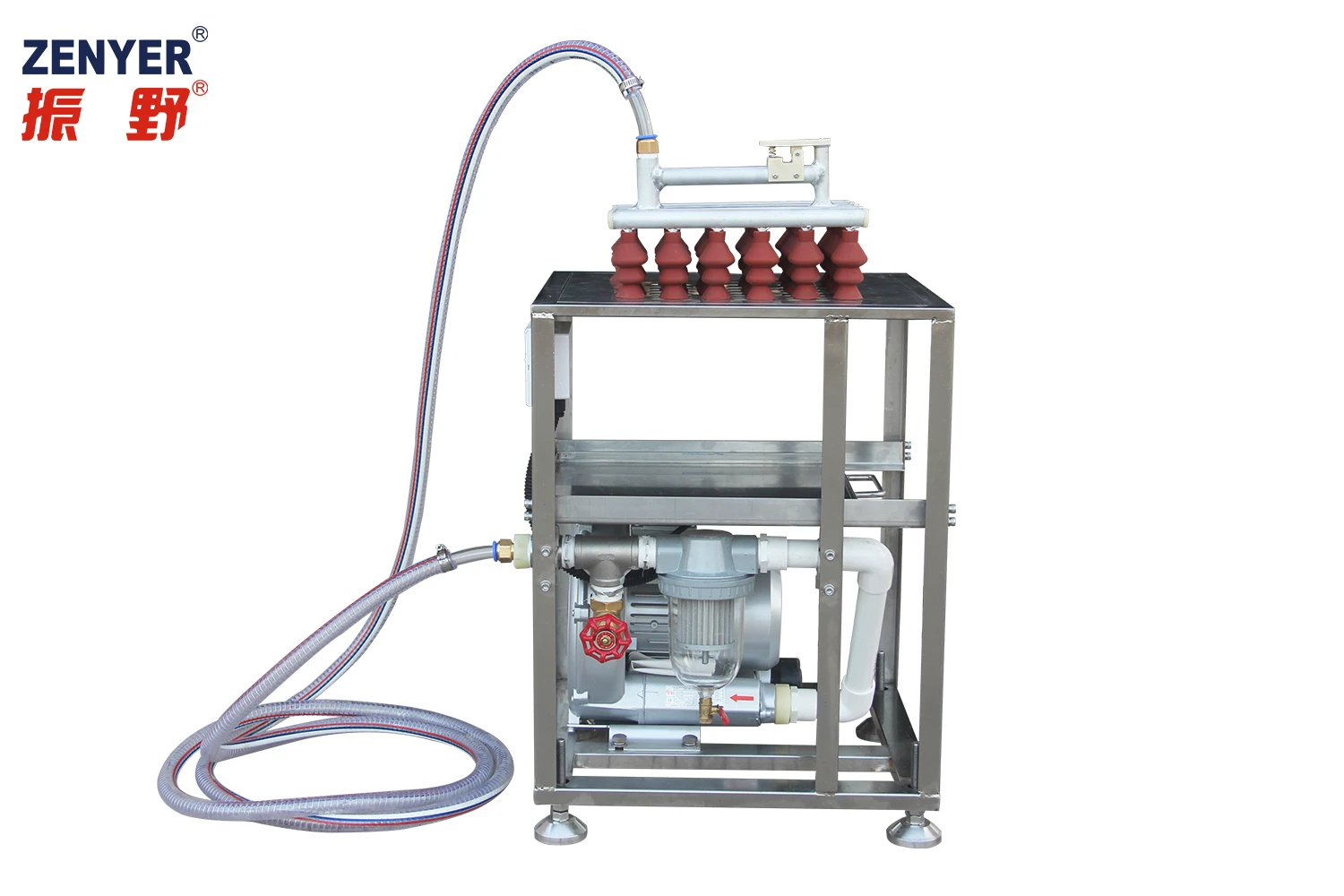
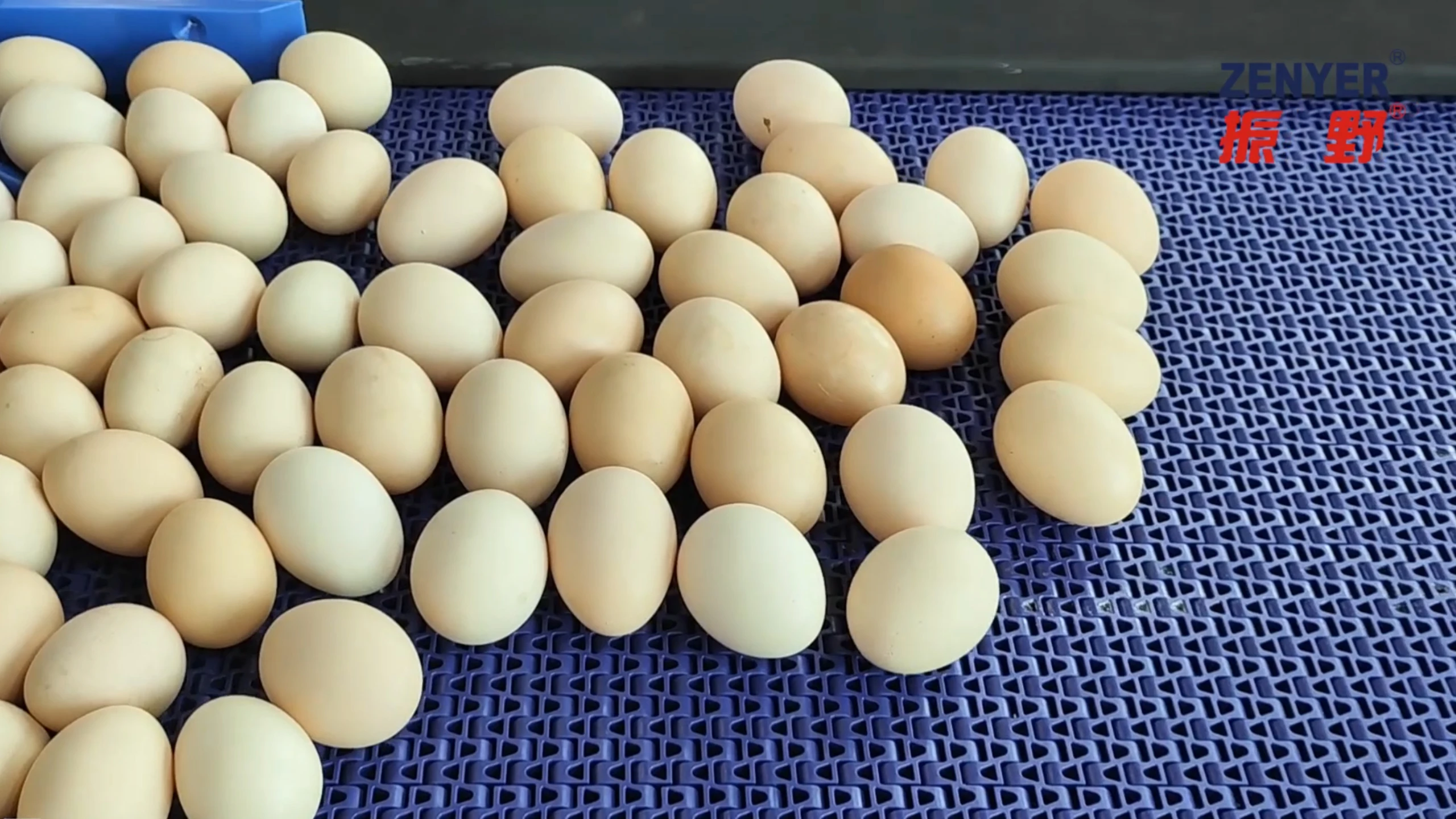
1. 602 Egg Sucker: A manual operator uses 5*6 suction cups to pick up eggs from the egg tray, picking 30 eggs at a time, and then places them on the egg conveyor belt.
2. 605A Egg Conveyor: This egg conveyor system combines egg transportation with the function of changing from six rows to a single row. It consists of two sections, each equipped with modular belts and guide rails, as well as rubber wheels. These components ensure that the eggs move smoothly along the rubber wheels, orderly transitioning from six rows to a single row, and then seamlessly onto the single-row rollers of the egg grading machine.
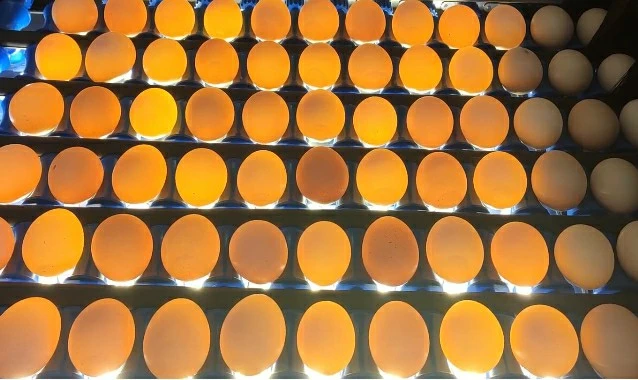
Light Inspection: The LED light inspection device is installed below the single-row rollers. As the eggs pass through the rollers, human eyes use light transmission to detect and identify damaged eggs, eggs with abnormal shapes, as well as eggs that are defective due to issues such as black cores or mold.
3. 202A Egg Washing Machine Main Unit:
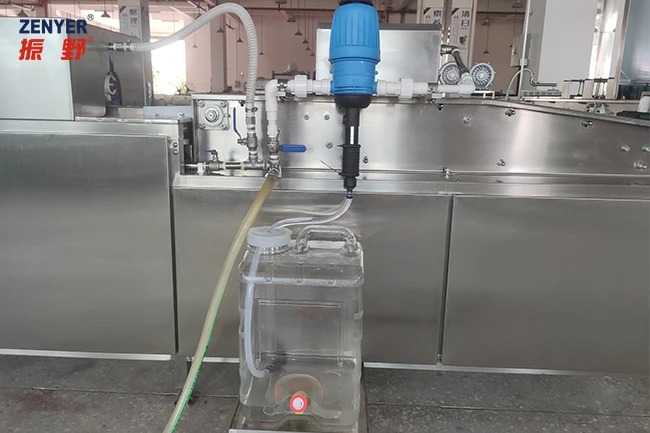
Disinfection Spraying: For the purpose of food safety, the disinfection spraying system automatically sprays a food-grade cleaner or disinfectant (provided by the customer) on the surface of the eggs.
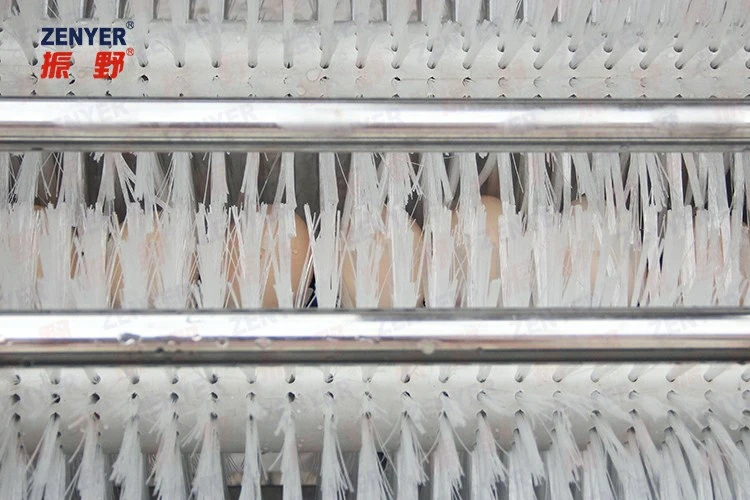
Cleaning: The eggs are placed into an egg cleaning machine, where they are sprayed with warm water and brushed before entering the air-drying system. The water heater is provided by the customer. For food safety reasons, the water used for cleaning the eggs cannot be reused, and the amount of water used can be adjusted according to the degree of dirt on the eggs.
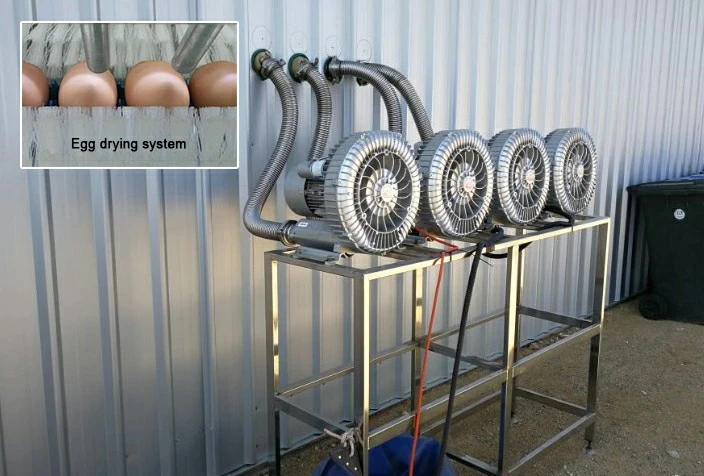
Air Drying: The air drying brush at the rear of the egg cleaning machine removes most of the water from the eggs, and the remaining droplets are dried by the strong airflow generated by the fan, achieving a drying rate of up to 95% (which depends on the local environmental humidity).
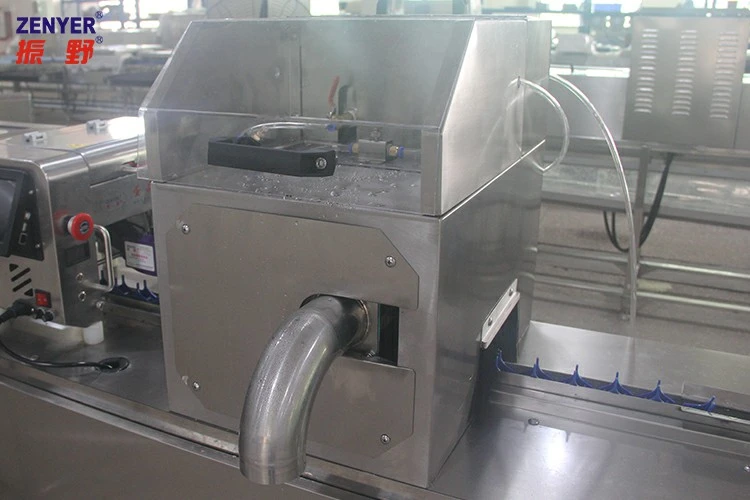
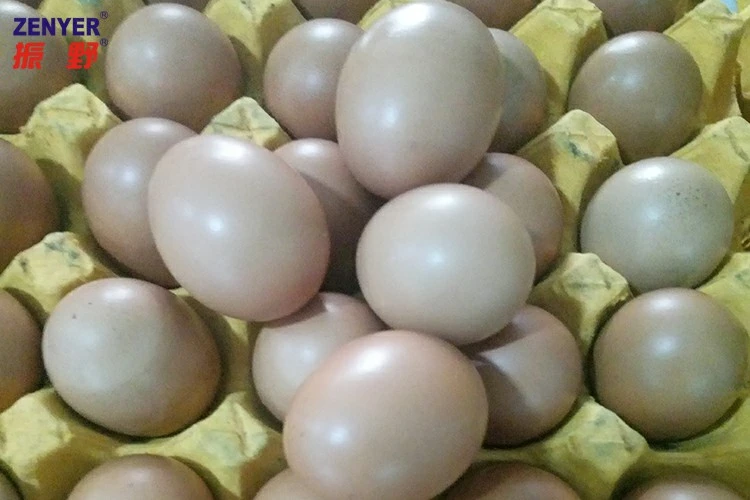
Spraying: Apply food-grade white mineral oil onto the surface of the dry and clean eggs. A uniquely designed spraying device atomizes the white mineral oil into particles smaller than 0.05mm, which then adhere to the eggshell. These particles are quickly absorbed by the eggshell’s capillaries, forming a protective layer that helps reduce the loss of moisture inside the egg and prevents the entry of external bacteria. (The air compressor used for spraying is provided by the customer.)
Fuel injection effect
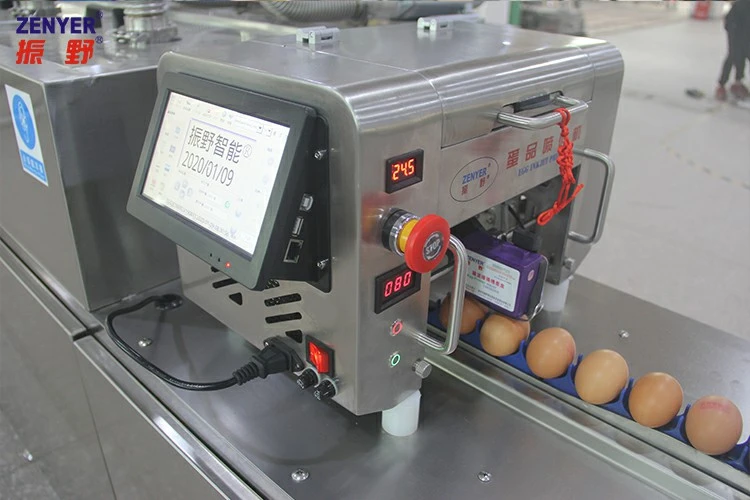
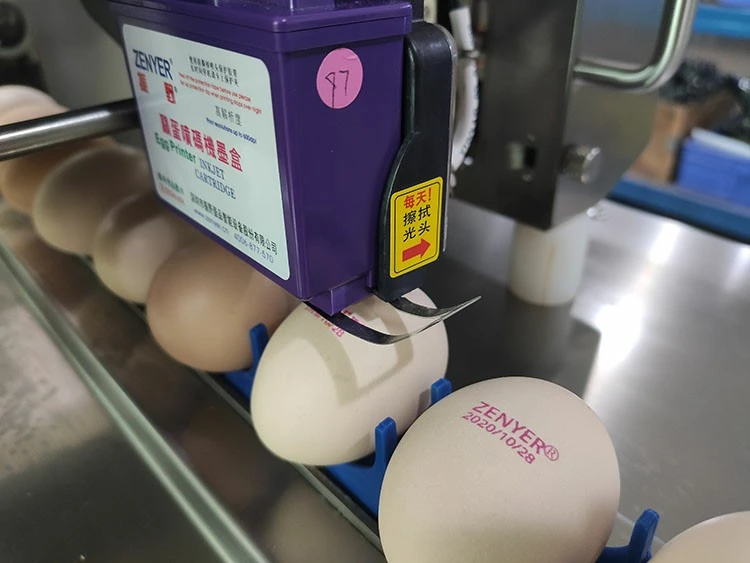
4. 401H Egg Coding Machine: A touch-screen, color-sensitive coding machine that triggers the coding process when an egg passes through the sensor located below the machine. It is capable of printing text, dates, images, logos, and serial numbers onto eggs. The uniquely designed ink cartridge suspension system ensures that eggs of various sizes can be successfully coded.
Inkjet printing effect
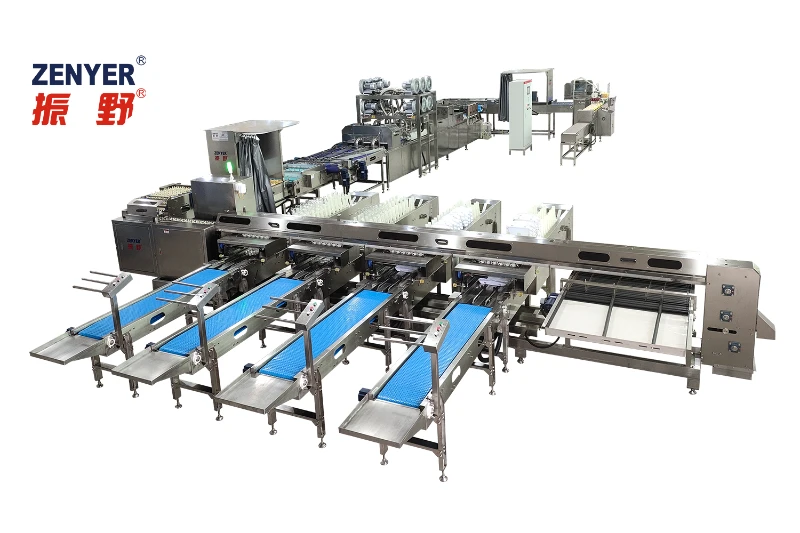
5. 104B Egg Grading Machine Main Unit:
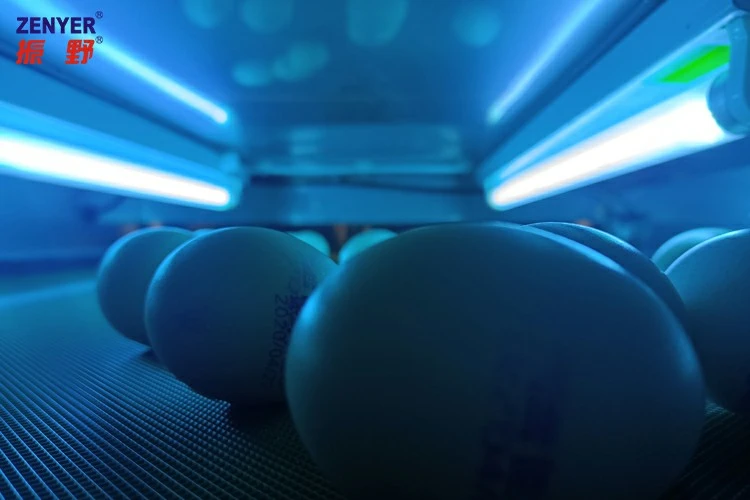
Sterilization: The eggs are sterilized by passing through an area equipped with ultraviolet germicidal lamps, reducing the number of bacteria on the eggshell surface to a minimum.
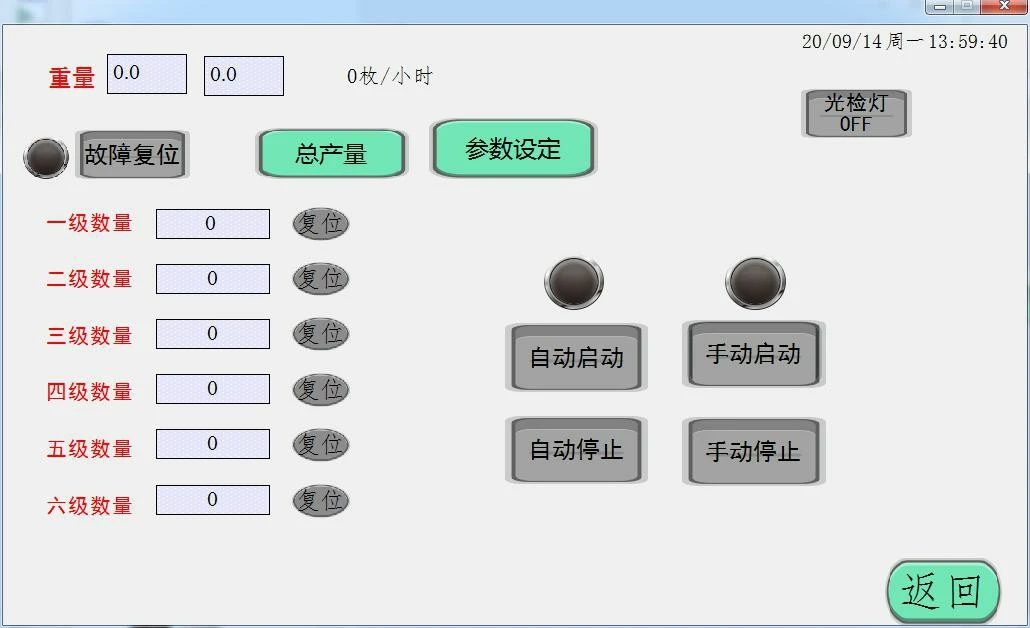
Grading and Counting: A color touchscreen PLC electronic grader with self-fault diagnosis capabilities. It can intelligently count the number of eggs at each grade for each shift, as well as the total number of eggs in each grade. The grading accuracy is ±1 gram.
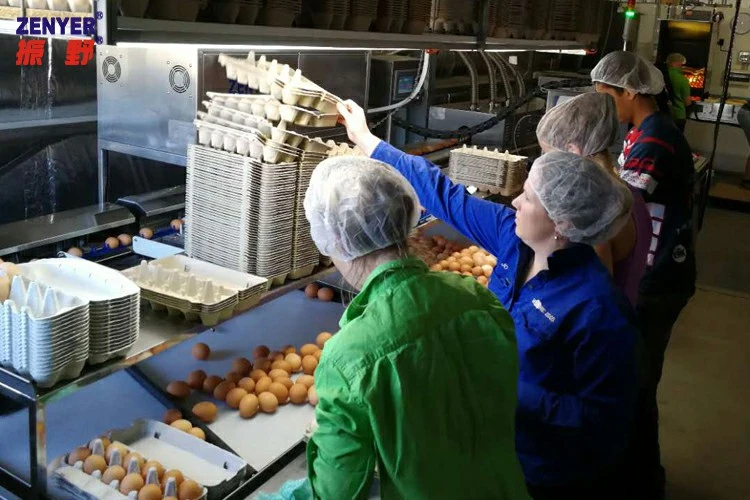
Manual egg collection and packaging (egg collection table): Eggs of the main sizes fall onto the rolling foam rollers and then flow onto the integrated egg collection table. Workers collect the eggs and place them into containers. This egg collection table can be used for packaging eggs of up to six different sizes. Eggs that are too large or too small are directed to the section at the back of the equipment, where they are classified as substandard.
Features
- 1) Processing capacity of 10,000 units per hour, with the ability to be divided into 3-6 levels.
- 2) Grading accuracy within ±1g, with flexible configuration of grading schemes.
- 3) Integrates cleaning, optical inspection, and grading into one system.
- 4) Manufactured from 304 stainless steel, ensuring stable and reliable operation.
Specifications
Features
- 1) Processing capacity of 10,000 units per hour, with the ability to be divided into 3-6 levels.
- 2) Grading accuracy within ±1g, with flexible configuration of grading schemes.
- 3) Integrates cleaning, optical inspection, and grading into one system.
- 4) Manufactured from 304 stainless steel, ensuring stable and reliable operation.